How to Clean Awnings: Complete Maintenance Guide
Keep your awning looking great and extend its lifespan with proper cleaning and maintenance—especially important in Florida's humid climate.
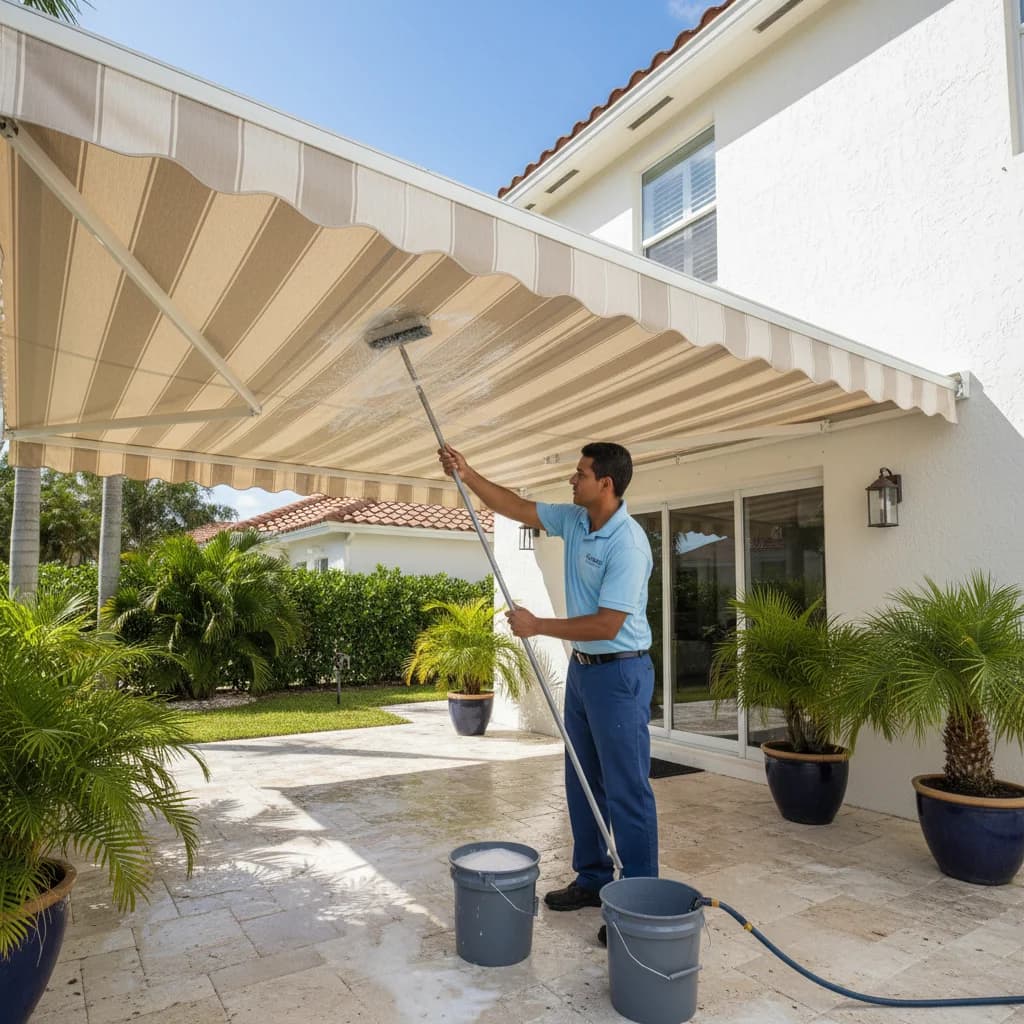
In Florida's humid subtropical climate, awning maintenance isn't optional—it's essential. High humidity, frequent rain, intense UV exposure, and (in coastal areas) salt spray all accelerate wear and promote mold growth. Regular cleaning can double the lifespan of your awning and keep it looking fresh.
Cleaning Frequency for Florida Awnings
How often you clean depends on your awning type and location:
| Awning Type | Inland Florida | Coastal Florida |
|---|---|---|
| Fabric (Acrylic) | Every 3-4 months | Every 2-3 months |
| Fabric (Vinyl/PVC) | Every 3-4 months | Every 2-3 months |
| Aluminum | 1-2 times/year | Every 3-4 months |
How to Clean Fabric Awnings (Step-by-Step)
Follow these steps for a thorough fabric awning cleaning:
What You'll Need:
- Garden hose with spray nozzle
- Soft-bristle brush or broom
- Bucket
- Mild dish soap (Dawn works well)
- Bleach (for mold/mildew)
- Spray bottle (optional)
- Ladder (if needed)
Step 1: Remove Loose Debris
Start by brushing off leaves, twigs, dirt, and cobwebs with a soft-bristle broom or brush. For retractable awnings, extend fully before cleaning. Work from the top down.
Step 2: Rinse with Water
Use a garden hose (not a pressure washer) to wet the entire awning surface. This removes loose dirt and prepares the fabric for cleaning solution. Wet both the top and underside.
Step 3: Prepare Cleaning Solution
For regular cleaning: Mix 1/4 cup mild dish soap per gallon of lukewarm water.
For mold and mildew: Mix 1 cup bleach + 1/4 cup dish soap per gallon of water. (Check your fabric manufacturer's guidelines—most solution-dyed acrylics like Sunbrella can tolerate diluted bleach.)
Step 4: Apply and Scrub
Apply the cleaning solution generously with a sponge, soft brush, or spray bottle. Scrub gently in circular motions, working in sections. Don't use stiff brushes or abrasive pads, which can damage the water-resistant coating.
Step 5: Let It Soak
Allow the cleaning solution to sit for 10-15 minutes. This gives it time to break down dirt, stains, and mold spores. Don't let it dry on the fabric.
Step 6: Rinse Thoroughly
Rinse completely with clean water until all soap residue is gone. Soap residue attracts dirt and can promote mold growth. Rinse both sides of the fabric.
Step 7: Air Dry Completely
Important: Let your awning dry fully before retracting. Storing a damp awning is the #1 cause of mold and mildew in Florida. On humid days, this may take several hours.
How to Clean Aluminum Awnings
Aluminum awnings are much easier to maintain than fabric:
- Rinse off debris with a garden hose
- Mix mild soap with water in a bucket
- Wash with a soft cloth or sponge
- Rinse thoroughly with clean water
- Optional: Apply car wax to powder-coated surfaces for extra protection
For stubborn stains or oxidation, use a non-abrasive aluminum cleaner. Avoid abrasive pads that can scratch the finish.
Removing Stubborn Stains
Mold and Mildew (Green/Black Spots)
- Apply bleach solution (1 cup per gallon)
- Let sit 15-20 minutes
- Scrub with soft brush
- Rinse thoroughly
- Repeat if necessary
Bird Droppings
- Soften dried droppings with water
- Gently scrape with plastic scraper
- Clean area with soap solution
- Rinse and let dry
Tree Sap
- Apply rubbing alcohol or mineral spirits to a cloth
- Dab (don't rub) the sap
- Clean area with soap and water
- Rinse thoroughly
Rust Stains (from metal furniture)
- Mix lemon juice with salt
- Apply paste to stain
- Let sit 30 minutes
- Scrub gently and rinse
Preventive Maintenance Tips
Beyond cleaning, these practices extend awning life in Florida:
- Retract during storms: High winds can damage extended awnings
- Shake off pooled water: Don't let water sit on fabric
- Trim nearby trees: Reduce debris, sap, and bird activity
- Apply fabric guard: Re-apply water repellent annually (Sunbrella recommends 303 Fabric Guard)
- Inspect hardware: Check screws, bolts, and moving parts yearly
- Lubricate mechanisms: Use silicone spray on moving parts annually
When to Call a Professional
Consider professional awning cleaning if:
- Your awning is too high to safely reach
- Mold/mildew keeps returning despite cleaning
- You have a large commercial awning
- The fabric has lost its water repellency
- You notice tears, fraying, or hardware issues
Professional cleaning typically costs $100-$300 and may include re-application of fabric guard and minor repairs.
Find Awning Service Providers
Many awning installers also offer maintenance and cleaning services. Connect with local professionals:
Related Guides
Frequently Asked Questions
How often should I clean my awning in Florida?
In Florida's humid climate, clean fabric awnings every 3-4 months to prevent mold and mildew buildup. Aluminum awnings need cleaning only 1-2 times per year. More frequent cleaning may be needed in coastal areas due to salt spray.
Can I pressure wash my awning?
Avoid pressure washing fabric awnings as it can damage the water-resistant coating and force water into seams. Use a garden hose with moderate pressure. Aluminum awnings can tolerate gentle pressure washing on low settings.
What is the best cleaner for fabric awnings?
Use a mild soap solution (1/4 cup dish soap per gallon of water) for regular cleaning. For mold and mildew, mix 1 cup bleach with 1/4 cup soap per gallon of water. Sunbrella fabric can tolerate diluted bleach; check your manufacturer's recommendations.
How do I remove green mold from my awning?
Apply a bleach solution (1 cup bleach per gallon of water), let sit for 15 minutes, then scrub gently with a soft brush and rinse thoroughly. For stubborn mold, commercial awning cleaners like 303 Fabric Guard or Wet & Forget work well.
Find Awning Installers in Your Area
Browse verified awning installers in these popular Florida areas:
Need a New Awning?
If your awning is beyond cleaning, get free quotes for a replacement.
Get Free Quotes