Retractable vs Fixed Awnings: Which is Right for You?
A detailed comparison to help Florida homeowners choose the perfect shade solution.
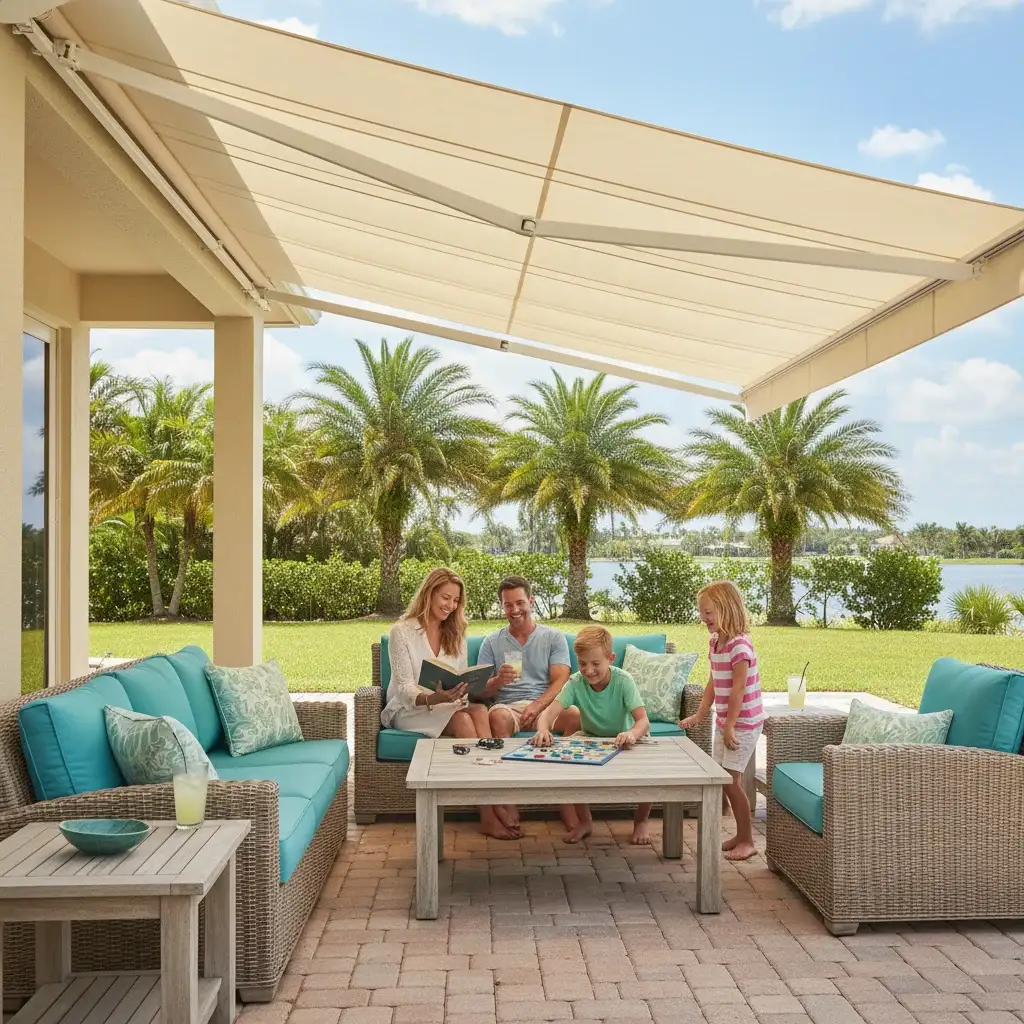
Retractable awnings cost $1,500–$7,000, survive Florida storms better (you pull them in), and are best for patios/decks. Fixed awnings cost $800–$3,000, last longer with no motor, and work best for permanent shade over windows and entryways. Choose retractable for flexibility, fixed for simplicity and lowest lifetime cost.
Choosing between a retractable and fixed awning is one of the first decisions Florida homeowners face when shopping for outdoor shade. Both options have distinct advantages, and the right choice depends on your specific needs, budget, and how you use your outdoor space.
Retractable Awnings: Flexibility and Control
Retractable awnings can be extended when you need shade and retracted when you want sun or during bad weather. They're the most popular choice for Florida patios and decks.
Pros of Retractable Awnings
- Flexibility: Extend for shade, retract for sun or stargazing
- Weather protection: Can be retracted during storms to prevent damage
- Longer fabric life: Less constant UV exposure extends material lifespan
- Better views: When retracted, doesn't obstruct sightlines
- Motorized options: Available with remote control and smart home integration
Cons of Retractable Awnings
- Higher cost: Typically 2-3x more expensive than fixed awnings
- More maintenance: Moving parts require occasional service
- Requires management: Someone must retract during storms
- Limited projection: Usually max out around 14 feet
Fixed Awnings: Permanence and Simplicity
Fixed awnings are permanently mounted structures that provide constant shade. They're ideal for areas where you always want coverage, like over windows or entrance doors.
Pros of Fixed Awnings
- Lower cost: More affordable upfront investment
- No moving parts: Less maintenance required
- Always ready: No action needed to get shade
- Structural options: Can support heavier materials like metal
- Larger spans: Can cover bigger areas than retractable
Cons of Fixed Awnings
- No flexibility: Can't adjust to weather or preference
- Storm risk: Must be built to withstand Florida weather
- Faster wear: Constant sun exposure degrades fabric faster
- Permanent commitment: Harder to remove or relocate
Cost Comparison
| Feature | Retractable | Fixed |
|---|---|---|
| Typical Cost | $2,000 - $6,000 | $500 - $2,000 |
| Installation | $300 - $800 | $200 - $500 |
| Lifespan | 10-15 years | 5-10 years |
| Annual Maintenance | $100 - $200 | Minimal |
Florida Weather: The Deciding Factor
Florida's climate makes this decision more consequential than in other states. Here's how each type handles our unique weather challenges:
Hurricane Season (June-November)
This is where retractable awnings have a clear advantage. When a storm approaches, you simply retract the awning into its protective housing. Fixed awnings must be engineered to withstand your local wind code requirements — which means higher costs for hurricane-rated construction, especially in South Florida's HVHZ zone.
Afternoon Thunderstorms
Florida's daily summer storms are unpredictable. Motorized retractable awnings with wind sensors automatically retract when gusts exceed 25-35 mph. With a fixed awning, you need to ensure the frame and fabric can handle sustained wind and heavy rain without pooling water on the surface.
Intense UV and Heat
Both types block 95-98% of UV rays with quality fabric. However, retractable awnings allow you to control heat — extend for shade during peak hours (10am-4pm) and retract in the evening when temperatures drop. Fixed awnings provide constant shade, which is ideal for west-facing windows that receive brutal afternoon sun.
Humidity and Mold
Retractable awnings have an advantage here: when retracted, the fabric dries faster and is less exposed to moisture. Fixed awnings are constantly exposed to Florida's humidity, making regular cleaning essential to prevent mold and mildew growth.
Energy Savings Comparison
Both awning types reduce cooling costs, but in different ways:
- Retractable patio awnings: Block solar heat gain through sliding glass doors and large windows. Studies show 25%+ reduction in cooling costs when deployed during peak sun hours.
- Fixed window awnings: Provide constant shade to windows, reducing solar heat gain by 65-77% on south-facing and 72-77% on west-facing windows (U.S. Department of Energy data).
For maximum energy savings, many Florida homeowners install both: fixed awnings on south and west windows, plus a retractable awning over the main patio or deck area.
Permits and Building Codes
Florida's permit requirements differ significantly between the two types:
- Fixed awnings: Almost always require a building permit since they're permanent structures. Must meet Florida Building Code wind load requirements for your zone.
- Retractable awnings: Many Florida counties exempt retractable awnings from structural permits, though electrical permits may be needed for motorized models.
This can save $100-$300 in permit fees and weeks of waiting time for retractable installations.
Best Uses in Florida
Choose retractable for: Patios, decks, outdoor dining areas, pool areas, anywhere you want flexibility between sun and shade.
Choose fixed for: Window shading, entrance awnings, commercial storefronts, carports, and areas where you always want shade.
Our Recommendation for Florida Homeowners
For most Florida patio and deck applications, we recommend motorized retractable awnings with wind sensors. Yes, they cost more upfront, but the flexibility is invaluable in Florida's variable weather. The wind sensors automatically retract the awning when gusts pick up, protecting your investment during sudden storms.
For window shading and entrances, fixed awnings remain an excellent, cost-effective choice. Just ensure they're properly rated for Florida wind conditions.
For the best of both worlds, consider a combination: fixed awnings on your most sun-exposed windows for constant energy savings, plus a retractable awning over your main outdoor living area for flexible shade.
Related Guides
Frequently Asked Questions
Are retractable awnings better than fixed awnings in Florida?
For most Florida patios and decks, retractable awnings are the better choice because they can be retracted during hurricanes and storms. Fixed awnings work well for windows and entrances where permanent shade is desired and the awning can be built to withstand high winds.
How much more do retractable awnings cost than fixed?
Retractable awnings typically cost $2,000-$6,000 installed, while fixed awnings cost $500-$2,000. Motorized retractable models with wind sensors cost more but offer automatic storm protection, which is valuable in Florida.
Do retractable awnings hold up in Florida weather?
Yes, quality retractable awnings last 10-15 years in Florida when properly maintained. The key advantage is that they can be retracted during storms, actually protecting them from damage. Wind sensors on motorized models automatically retract when gusts pick up.
Can fixed awnings withstand Florida hurricanes?
Fixed awnings must be engineered and rated for your local wind zone to withstand hurricane-force winds. In South Florida, this means 170+ mph ratings. Hurricane-rated fixed awnings cost significantly more but provide year-round protection without any action needed.
Find Awning Installers in Your Area
Browse verified awning installers in these popular Florida areas:
Find Awning Installers in Your Area
Connect with top-rated local awning companies for free quotes and expert advice.
View all Florida regions →Need Help Deciding?
Get free advice and quotes from local awning experts who know Florida homes.
Get Free Quotes →