Aluminum vs Fabric Awnings: Which is Better for Florida?
A head-to-head comparison of the two most popular awning materials for Florida homes.
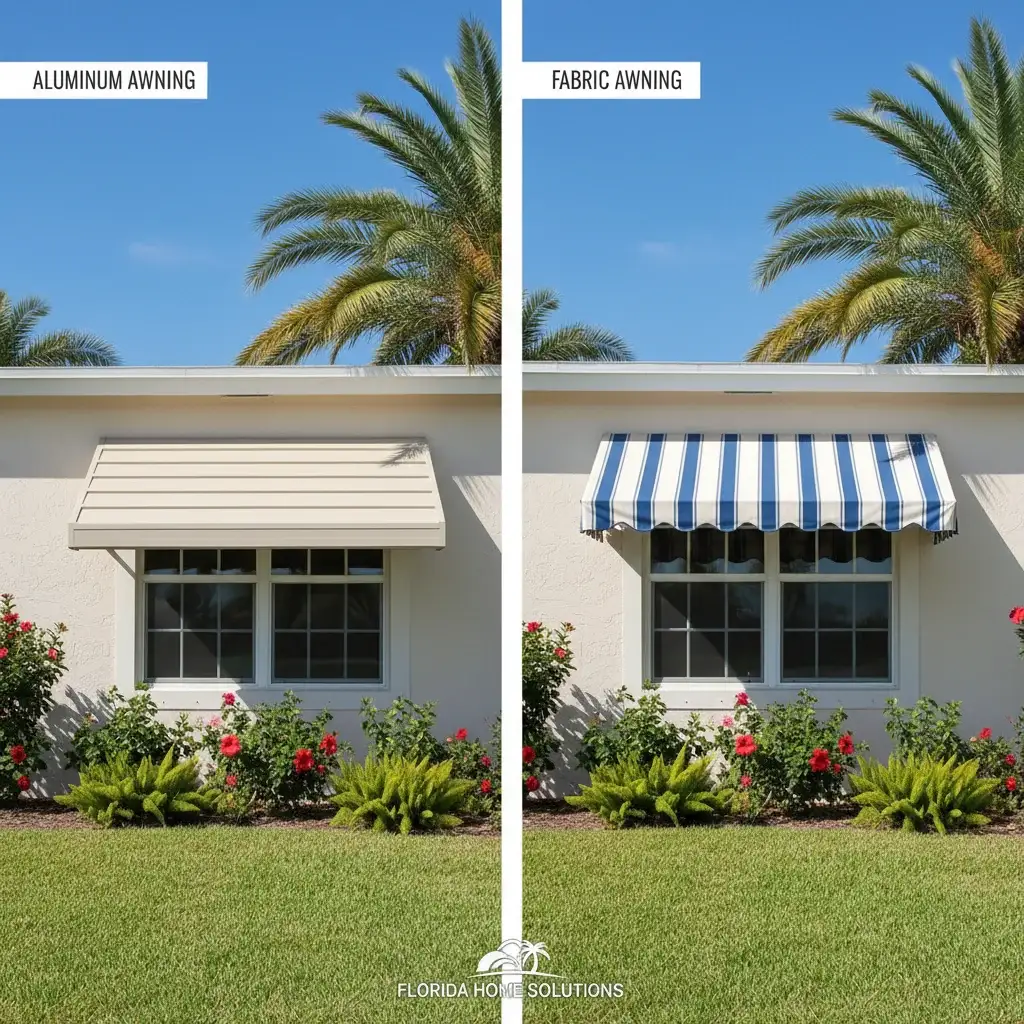
When shopping for awnings in Florida, you'll quickly discover that aluminum and fabric are the two dominant material choices. Each has distinct advantages and trade-offs, and the right choice depends on your priorities, budget, and how you plan to use your outdoor space.
Quick Comparison
| Factor | Aluminum | Fabric |
|---|---|---|
| Lifespan | 20-30 years | 8-15 years |
| Initial Cost | $1,000-$4,000 | $1,500-$5,000* |
| Maintenance | Minimal | Regular cleaning |
| Aesthetics | Functional | Elegant |
| Hurricane Ready | Yes (engineered) | Retract before storm |
| Heat Reduction | Better (insulated) | Good |
*Fabric prices shown for retractable models; fixed fabric awnings cost less
Aluminum Awnings: The Durable Choice
Aluminum awnings have been a staple of Florida homes for decades, and for good reason. They're virtually indestructible in our climate.
Advantages of Aluminum
- Exceptional durability: Won't rot, warp, or rust (when properly finished)
- Low maintenance: Occasional rinse with a hose is all that's needed
- Hurricane-rated options: Can be engineered for 140+ mph winds
- Insulated panels available: Reduce heat transfer significantly
- Long lifespan: 20-30 years is typical
- Permanent shade: Always there when you need it
Disadvantages of Aluminum
- Industrial appearance: Less elegant than fabric options
- No flexibility: Fixed position—can't retract for full sun
- Limited colors: Fewer options than fabric
- Can feel utilitarian: May not suit all home styles
- Permit usually required: As a permanent structure
Best Uses for Aluminum in Florida
- Carports and vehicle protection
- Window awnings (fixed shade)
- Pool deck covers
- Commercial buildings
- Homes where hurricane rating is essential
- Areas where you always want shade
Fabric Awnings: The Elegant Choice
Fabric awnings, particularly retractable models, have surged in popularity for their combination of style and flexibility.
Advantages of Fabric
- Beautiful aesthetics: Wide range of colors, patterns, and styles
- Retractable options: Full sun when you want it, shade when you don't
- Softer appearance: Complements residential architecture
- Storm-safe (retractable): Tuck away during hurricanes
- No permit (often): Retractable awnings may not require permits
- Motorized convenience: One-touch operation available
Disadvantages of Fabric
- Shorter lifespan: 8-15 years for quality fabrics
- Maintenance required: Regular cleaning to prevent mold/mildew
- No rain protection (extended): Water pools if not designed for rain
- Florida humidity: Can promote mildew if neglected
- Replacement costs: Fabric needs replacement eventually
Best Uses for Fabric in Florida
- Patio entertaining areas
- Pool-side relaxation (retract when swimming)
- Restaurant and café outdoor seating
- Homes with varying shade needs
- Situations where aesthetics are priority
Florida Climate Considerations
Florida's unique climate impacts both materials in specific ways:
UV Exposure
Florida's intense sun fades inferior fabrics quickly. Always choose solution-dyed acrylics like Sunbrella, which have UV inhibitors woven into the fibers. Aluminum with quality powder-coating resists fading for decades.
Humidity and Rain
High humidity promotes mold and mildew on fabric if not cleaned regularly. Aluminum is impervious to moisture. If choosing fabric, budget for cleaning every 6-12 months.
Salt Air (Coastal)
Near the coast, salt accelerates corrosion. Use marine-grade aluminum with anodized or powder-coated finishes. Fabric is less affected by salt but may need more frequent rinsing.
Hurricanes
Retractable fabric awnings can be stored safely during storms—a major advantage. Fixed aluminum must be hurricane-rated, adding cost but providing year-round protection.
Cost Comparison Over 20 Years
Looking at lifetime costs tells a different story than upfront prices:
| Cost Factor | Aluminum | Fabric (Retractable) |
|---|---|---|
| Initial Purchase | $3,000 | $4,000 |
| Installation | $500 | $500 |
| Maintenance (20 yrs) | $200 | $1,000 |
| Replacement Fabric | $0 | $1,500 |
| 20-Year Total | $3,700 | $7,000 |
Which Should You Choose?
Choose aluminum if:
- You want permanent, always-available shade
- Low maintenance is a priority
- You need hurricane-rated protection
- You're covering a carport or large area
- Long-term value matters more than aesthetics
Choose fabric if:
- You want the flexibility to retract for full sun
- Aesthetics and style are important
- You enjoy the soft, elegant look of fabric
- You're willing to maintain the awning
- You want motorized convenience
Find Awning Installers Near You
Ready to explore your options? Local installers can show you samples of both materials and help you decide what's best for your home.
Related Guides
Frequently Asked Questions
Which lasts longer in Florida: aluminum or fabric awnings?
Aluminum awnings typically last 20-30 years with minimal maintenance, while quality fabric awnings last 8-15 years before needing replacement. Aluminum is the clear winner for longevity in Florida's harsh climate.
Are fabric awnings good for Florida humidity?
Solution-dyed acrylic fabrics like Sunbrella resist mold and mildew well in Florida's humidity. However, they still require regular cleaning (every 6-12 months) to prevent buildup. Aluminum requires almost no maintenance.
Which is more expensive: aluminum or fabric awnings?
Upfront, fabric retractable awnings cost $1,500-$5,000, while fixed aluminum awnings cost $1,000-$4,000. However, aluminum has lower lifetime costs due to minimal maintenance and longer lifespan.
Can fabric awnings withstand Florida hurricanes?
Retractable fabric awnings should be retracted before any storm. This actually protects your investment. Aluminum awnings can be engineered for hurricane-force winds (140+ mph) but add significant cost.
Find Awning Installers in Your Area
Browse verified awning installers in these popular Florida areas:
See Both Options In Person
Get free quotes and compare aluminum vs fabric samples from local installers.
Get Free Quotes