Shade Sail vs Awning: Which is Better for Your Florida Home?
Shade sails are trending as a budget-friendly alternative to awnings, but can they handle Florida's hurricanes, UV, and daily rainstorms?
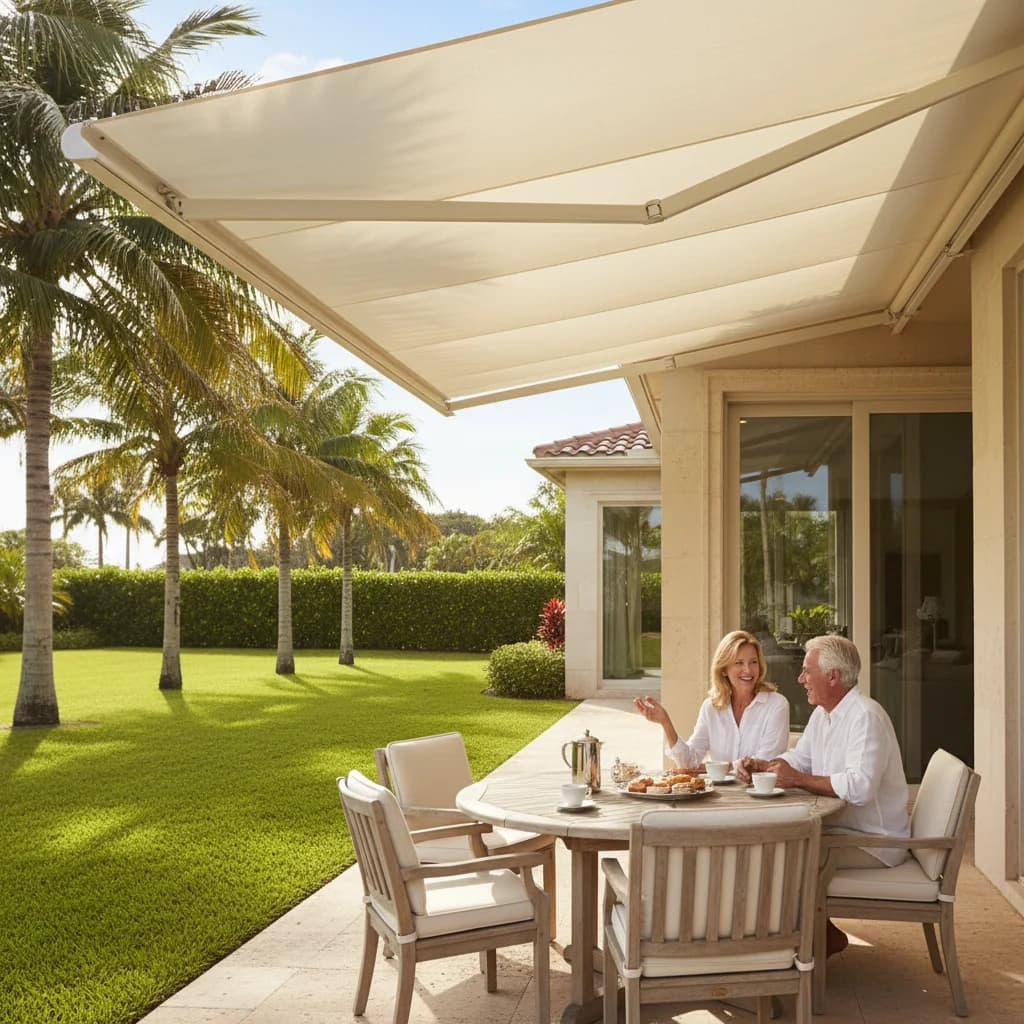
If you've been shopping for outdoor shade in Florida, you've probably come across shade sails. These triangular or rectangular fabric panels have become a popular, budget-friendly option for creating shaded areas in backyards and patios. But how do they really compare to traditional awnings when it comes to surviving Florida's unique climate challenges?
In this guide, we'll break down the key differences between shade sails and awnings so you can make the right choice for your Florida home. Spoiler: the answer depends on your budget, your priorities, and how much you value convenience during hurricane season.
Quick Comparison
| Factor | Shade Sail | Awning |
|---|---|---|
| Cost | $500 - $2,500 | $1,500 - $8,000 |
| UV Protection | 85-95% | 95-98%+ |
| Rain Protection | Minimal (porous) | Good (solid fabric) |
| Wind Resistance | Remove at 30+ mph | Retractable auto-retracts |
| Lifespan | 3-5 years | 10-15 years |
| Installation | DIY possible | Professional recommended |
| Aesthetics | Modern / casual | Classic / refined |
Understanding Shade Sails
Shade sails are large pieces of fabric — typically triangular, rectangular, or square — that are tensioned between poles, walls, or other anchor points to create a canopy of shade. They've gained popularity in recent years thanks to their modern look and accessible price point.
Advantages of Shade Sails
- Affordable entry point: Starting around $500 for a quality single sail, they're the most budget-friendly shade option
- DIY-friendly: Handy homeowners can install basic setups with mounting hardware and a few anchor points
- Modern aesthetic: The swooping, architectural look appeals to contemporary tastes
- Easy to replace: When a sail wears out, you simply swap the fabric — no structural changes needed
- Flexible layouts: Layer multiple sails in different colors and sizes for creative designs
Disadvantages of Shade Sails
- Limited rain protection: Most shade sails are porous by design to prevent water pooling — rain passes right through
- Shorter lifespan: Florida's intense UV degrades fabric in 3-5 years, even with UV stabilizers
- Must remove for storms: You'll need to take them down before every tropical storm, hurricane, or severe thunderstorm
- Requires solid anchor points: Posts must be set in concrete or attached to sturdy structural elements
- Can sag over time: Fabric stretches in Florida's heat, requiring periodic re-tensioning
Best Materials for Florida
If you go with a shade sail, choose HDPE (high-density polyethylene) knitted fabric — not woven. Knitted HDPE resists tearing, allows airflow, and holds up better against Florida's UV. Avoid cheap polyester sails that will deteriorate within a year or two.
Understanding Awnings
Awnings are fabric or metal covers that extend from your home's exterior wall. They come in several varieties, each suited to different needs and budgets:
- Retractable awnings: Extend and retract manually or with a motor — the most popular choice in Florida
- Motorized awnings: Feature remote control, timers, and optional wind/sun sensors for automatic operation
- Fixed awnings: Permanently installed for constant shade and weather protection
Advantages of Awnings
- Superior weather protection: Solid fabric keeps out both sun and rain
- Longer lifespan: Quality awnings last 10-15 years with proper maintenance
- Adds home value: Professional awnings are an attractive selling feature
- Convenient operation: Motorized models retract at the push of a button — or automatically with wind sensors
- Energy savings: Can reduce cooling costs by up to 25% by shading windows and patios
Disadvantages of Awnings
- Higher upfront cost: Quality retractable awnings start around $1,500 and go up significantly for motorized options
- Professional installation recommended: Especially for motorized models, improper mounting can void warranties
- Motorized models need maintenance: Annual inspections of motors, arms, and sensors keep them running smoothly
- Wall-mounted only: Must attach to your home (unlike freestanding shade sails)
The Florida Factor
Choosing outdoor shade in Florida isn't the same as choosing it in Colorado or Oregon. Our climate creates unique challenges that heavily influence this decision.
Hurricane Season
This is the biggest differentiator
Shade sails must be physically removed before any tropical storm or hurricane. That means climbing a ladder, detaching hardware, and storing the fabric — often in a rush as a storm approaches. Motorized retractable awnings with wind sensors automatically retract when winds pick up, protecting themselves without any effort from you. During a six-month hurricane season, this convenience factor is enormous.
UV Intensity
Florida ranks among the highest in the nation for UV exposure. Both shade sails and awnings provide meaningful UV protection, but awnings edge ahead with 95-98%+ UV blockage compared to 85-95% for most shade sails. That difference matters when you're sitting under it for hours. High UV also degrades shade sail fabric faster, contributing to their shorter lifespan in the Sunshine State.
Afternoon Rain
If you've lived in Florida for any length of time, you know the routine: beautiful morning, 2 PM thunderstorm, gorgeous evening. These daily summer storms are where awnings win decisively. A solid-fabric awning lets you stay outside during a passing shower. A shade sail? The rain comes right through, since most are designed with a porous weave to prevent dangerous water pooling.
Salt Air and Coastal Conditions
For coastal Florida homeowners, salt air accelerates the deterioration of shade sail fabric and hardware. Metal grommets and carabiners can corrode, and the sail material itself degrades faster. Quality awnings use marine-grade components and solution-dyed acrylic fabrics that are specifically engineered for coastal conditions.
Cost Comparison Over 10 Years
The upfront price difference is significant, but the long-term picture tells a more nuanced story:
| Cost Factor | Shade Sail | Retractable Awning |
|---|---|---|
| Initial Purchase | $1,500 | $4,000 |
| Installation | $0 (DIY) | $500 |
| Replacements (10 years) | ~$3,000 (2-3 replacements) | $0 |
| Maintenance | $0 | ~$500 |
| 10-Year Total | ~$4,500 | ~$5,000 |
Based on a mid-range setup for a typical 12x12 ft patio area
The Bottom Line on Cost
Over a decade, the total cost difference between shade sails and a retractable awning is surprisingly small — roughly $500. Factor in the convenience of not having to remove and reinstall your shade before every storm, and the awning's superior rain protection, and the value equation tips in the awning's favor for most Florida homeowners.
When Shade Sails Make Sense
Despite the challenges, shade sails can be a good fit in certain situations:
- Tight budget: If you need shade now and can't afford $1,500+, a quality shade sail gets you started for a fraction of the cost
- Temporary solution: Renting, planning to renovate, or testing out shade placement before committing to a permanent installation
- Modern aesthetic preference: The layered, geometric look of shade sails suits contemporary home designs
- Non-critical areas: Shading a play area, garden seating corner, or pool deck where rain protection isn't essential
- Freestanding needs: Shade sails can cover areas away from your home that wall-mounted awnings can't reach
When Awnings Make Sense
For most Florida homeowners, awnings are the stronger long-term choice:
- Permanent shade solution: You want something that lasts a decade or more without replacement
- Rain protection matters: You use your patio during Florida's daily summer showers
- Hurricane convenience: You don't want to scramble with ladders and hardware when storms approach
- Home value: You're investing in your property and want a feature that appeals to future buyers
- Energy savings: Shading south- and west-facing windows reduces cooling costs significantly
- Premium outdoor living: You want a polished, professional look that complements your home's architecture
Find Local Shade Installers
Whether you're leaning toward a shade sail or an awning, getting quotes from local Florida installers is the best next step. They can assess your space, recommend the right solution, and provide accurate pricing.
Related Guides
Frequently Asked Questions
Are shade sails better than awnings in Florida?
For budget-conscious homeowners who don't mind replacing them every 3-5 years, shade sails can work. But for Florida's hurricane season, heavy rains, and intense UV, awnings provide better long-term value and convenience.
How long do shade sails last in Florida?
Typically 3-5 years in Florida's harsh climate. UV radiation degrades the fabric, and they must be removed before every storm to prevent damage. Quality HDPE sails with UV stabilizers last longer than cheaper options.
Can shade sails withstand Florida hurricanes?
No. Shade sails must be removed before any tropical storm or hurricane. Even strong thunderstorm winds can damage them. Motorized retractable awnings with wind sensors automatically retract for protection.
Are shade sails waterproof?
Most shade sails are not waterproof — they're designed to let water pass through to prevent pooling. This means limited rain protection during Florida's frequent afternoon storms. Awnings with solid fabric provide much better rain coverage.
Find Awning Installers in Your Area
Browse verified awning installers in these popular Florida areas:
Ready to Find Your Perfect Shade Solution?
Get free quotes from trusted local awning installers in your area. Compare options and find the best fit for your Florida home.
Get Free Quotes