How Awnings Protect Against UV Damage & Furniture Fading
Understanding UV protection and how the right awning saves your furniture, flooring, and skin.
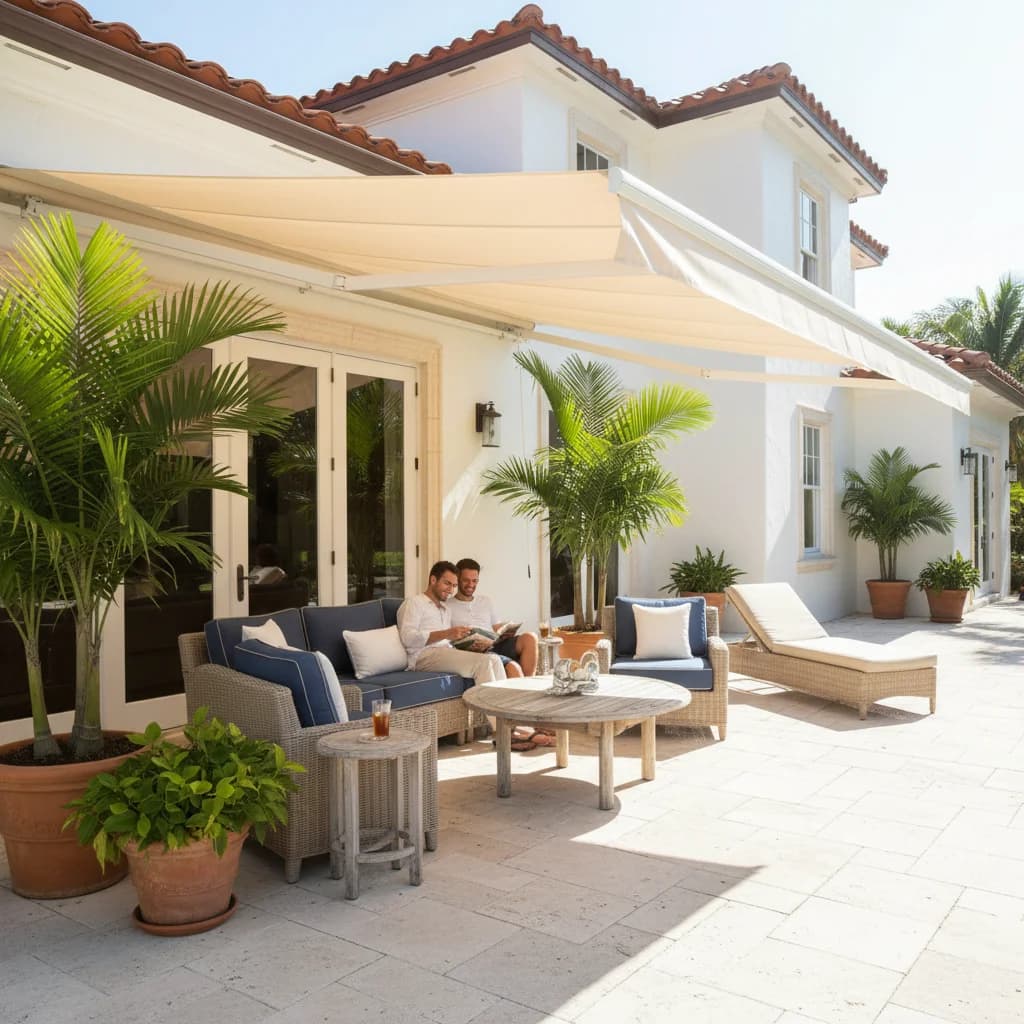
Florida receives some of the most intense UV radiation in the continental United States. This relentless sun exposure doesn't just affect your skin—it damages outdoor furniture, fades indoor flooring near windows, and degrades materials throughout your home. A properly chosen awning is one of the most effective solutions for UV protection.
Understanding UV Radiation in Florida
Florida's latitude and climate create exceptionally high UV exposure levels:
- The UV Index regularly reaches 10-11 (considered "very high" to "extreme")
- UV exposure is significant even on cloudy days (up to 80% penetrates clouds)
- Reflected UV from water, sand, and concrete increases exposure
- Peak UV hours extend from 10 AM to 4 PM year-round
How UV Causes Fading and Damage
UV radiation damages materials through a process called photodegradation. When UV rays hit fabrics, plastics, and wood, they break down chemical bonds at the molecular level, causing:
- Color fading: Dyes and pigments break down, causing colors to fade unevenly
- Fiber weakening: Fabric fibers become brittle and prone to tearing
- Plastic degradation: Outdoor furniture becomes chalky, brittle, and discolored
- Wood damage: Decking and furniture grays, cracks, and splinters
What Gets Damaged Without UV Protection?
Outdoor Furniture
Even "UV-resistant" outdoor furniture suffers in Florida's intense sun. Cushion fabrics fade within a single season, and plastic frames become brittle within a few years. A quality patio set costing $2,000-$5,000 may need replacement in just 3-5 years without adequate shade.
Indoor Flooring Near Windows
UV rays streaming through windows and sliding glass doors cause dramatic fading on hardwood floors, rugs, and carpet. You may notice obvious color differences where furniture blocked the sun. Awnings that shade windows block up to 65% of UV before it enters your home.
Artwork and Decor
Photos, paintings, and decorative items near sunny windows fade over time. Museums use UV-filtering glass for a reason—and exterior shading provides even better protection.
How Awnings Block UV Rays
Quality awning fabrics are specifically engineered to block UV radiation. Here's how they perform:
UV Blocking by Awning Type
| Fabric Type | UV Block Rate |
|---|---|
| Solution-Dyed Acrylic (e.g., Sunbrella) | 98%+ |
| Vinyl/PVC Coated | 95-100% |
| Aluminum Louvers | 100% |
| Shade Mesh/Screen | 70-90% |
UPF Ratings Explained
Some awning fabrics carry a UPF (Ultraviolet Protection Factor) rating, similar to SPF for sunscreen. A UPF 50 fabric allows only 1/50th (2%) of UV rays to pass through. For Florida, look for fabrics rated UPF 50+.
Protecting Your Skin
Beyond furniture protection, awnings create safer outdoor spaces for your family:
- Reduces sunburn risk while enjoying your patio
- Makes outdoor dining and entertaining more comfortable
- Especially important for children, elderly, and those with sun sensitivity
- Allows you to spend more time outdoors without sun damage
Does Awning Color Affect UV Protection?
For quality fabrics like Sunbrella, color makes little difference in UV protection—a light beige blocks UV just as effectively as a dark navy. However, color does affect:
- Heat transfer: Lighter colors reflect more heat, keeping the space below cooler
- Light transmission: Lighter colors allow more ambient light through while still blocking UV
- Visibility: From inside, darker awnings can create a cave-like feeling
For maximum comfort in Florida, lighter awning colors are generally recommended for their heat-reflection properties.
Calculating Your ROI
Consider how quickly UV protection pays for itself:
- A $3,000 outdoor furniture set lasts 3 years unprotected vs. 8+ years with shade = $1,500+ savings
- Avoiding one hardwood floor refinishing job = $2,000-$4,000 savings
- Reduced need to replace faded cushions, rugs, and decor = hundreds per year
- Lower AC costs from blocking solar heat gain = $300+ per year
Tips for Maximum UV Protection
- Size matters: An awning that extends far enough to shade windows and seating areas provides the best protection
- Consider the angle: West-facing windows receive the most intense afternoon sun
- Keep it extended: An awning only protects when it's deployed
- Combine strategies: Awnings work best alongside UV-filtering window film for interior protection
Related Guides
Frequently Asked Questions
How much UV do awnings block in Florida?
Quality awning fabrics like solution-dyed acrylic (Sunbrella) block 98%+ of UV rays. Aluminum louver awnings block 100%. Even shade mesh provides 70-90% UV protection. For maximum protection in Florida, look for fabrics rated UPF 50+.
Do awnings prevent furniture from fading?
Yes, significantly. UV radiation causes photodegradation — breaking down dyes, fibers, and plastics at the molecular level. By blocking 95-98% of UV rays, awnings can extend outdoor furniture life from 3-5 years to 8+ years in Florida's intense sun.
Does awning color affect UV protection?
For quality fabrics like Sunbrella, color makes little difference in UV blocking — light and dark colors both block 98%+ of UV rays. However, lighter colors reflect more heat, keeping the space below cooler, which is important in Florida.
Can awnings protect indoor flooring from sun damage?
Yes. Awnings that shade windows and sliding glass doors block 65-77% of solar heat gain and UV rays before they enter your home. This prevents fading on hardwood floors, carpets, and rugs near sun-exposed windows.
Find Awning Installers in Your Area
Browse verified awning installers in these popular Florida areas:
Find Awning Installers in Your Area
Connect with top-rated local awning companies for free quotes and expert advice.
View all Florida regions →Protect Your Investment from Florida Sun
Get free quotes from local installers who understand Florida's UV challenges.
Get Free Quotes →