The Complete Florida Awning Buying Guide
Everything you need to know before investing in shade for your Florida home. From types and materials to costs and installation.
In This Guide
Why Florida Homes Need Quality Shade
Florida's intense sun isn't just uncomfortable—it's damaging. With over 260 sunny days per year and some of the highest UV index readings in the country, unprotected outdoor spaces become unusable for much of the day. Your patio furniture fades, your deck becomes too hot to walk on, and your air conditioning works overtime trying to cool rooms with sun-exposed windows.
For Florida homeowners, especially those who moved here to enjoy outdoor living, quality shade isn't a luxury—it's essential. The right awning or patio cover transforms an unused space into your home's most valuable feature.
The Real Benefits
- Temperature reduction: Quality shade can reduce surface temperatures by 20-30°F
- Energy savings: Shading windows and doors can cut AC costs by 15-25%
- UV protection: Block up to 98% of harmful UV rays
- Home value: Well-designed outdoor living spaces increase property appeal
Awning Types Compared
Not all shade solutions are equal, and what works in other states may not be ideal for Florida. Here's an honest comparison of your options:
Retractable Awnings
Best for: Homeowners who want flexibility and protection during storms.
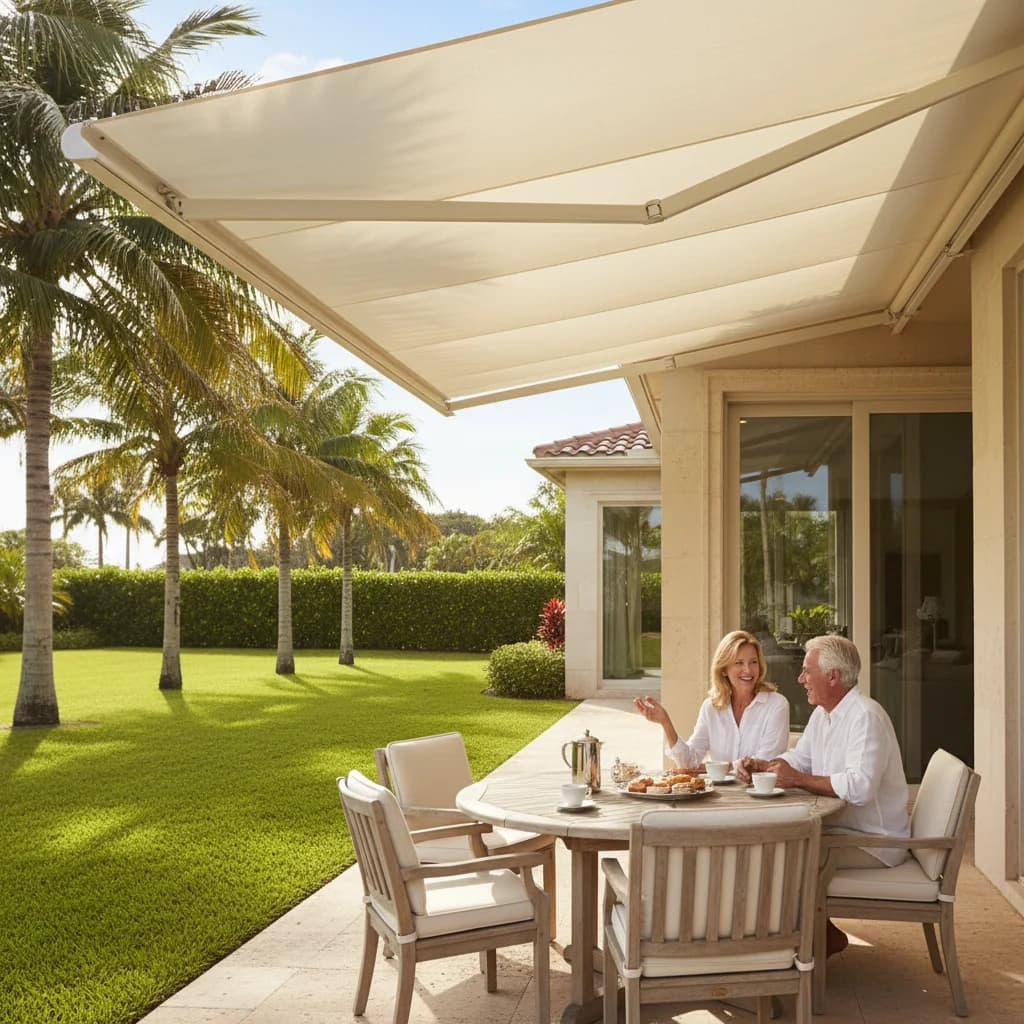
Retractable awnings extend over patios, decks, or windows when you need shade and retract into a protective housing when not in use. This is crucial in Florida where leaving an awning extended during a storm can result in damage.
- Manual retractable: Operated by hand crank. Lower cost, but requires physical effort. Good for smaller awnings.
- Motorized retractable: One-button operation, often with remote control. Worth the upgrade for anything over 10 feet wide.
Florida consideration: Motorized models can include wind sensors that automatically retract the awning when wind speeds exceed safe levels—a valuable feature if you travel or aren't always home during afternoon storms.
Fixed/Stationary Awnings
Best for: Permanent shade over windows, doors, or small areas where retraction isn't needed.
Fixed awnings mount permanently above windows, doors, or small patios. They're simpler and often less expensive, but can't be adjusted. In Florida, choose styles designed for hurricane-prone areas.
Florida consideration: Metal fixed awnings (aluminum or steel) hold up better than fabric in our climate and can be hurricane-rated.
Patio Covers & Pergolas
Best for: Large outdoor living areas, outdoor kitchens, and pool decks.
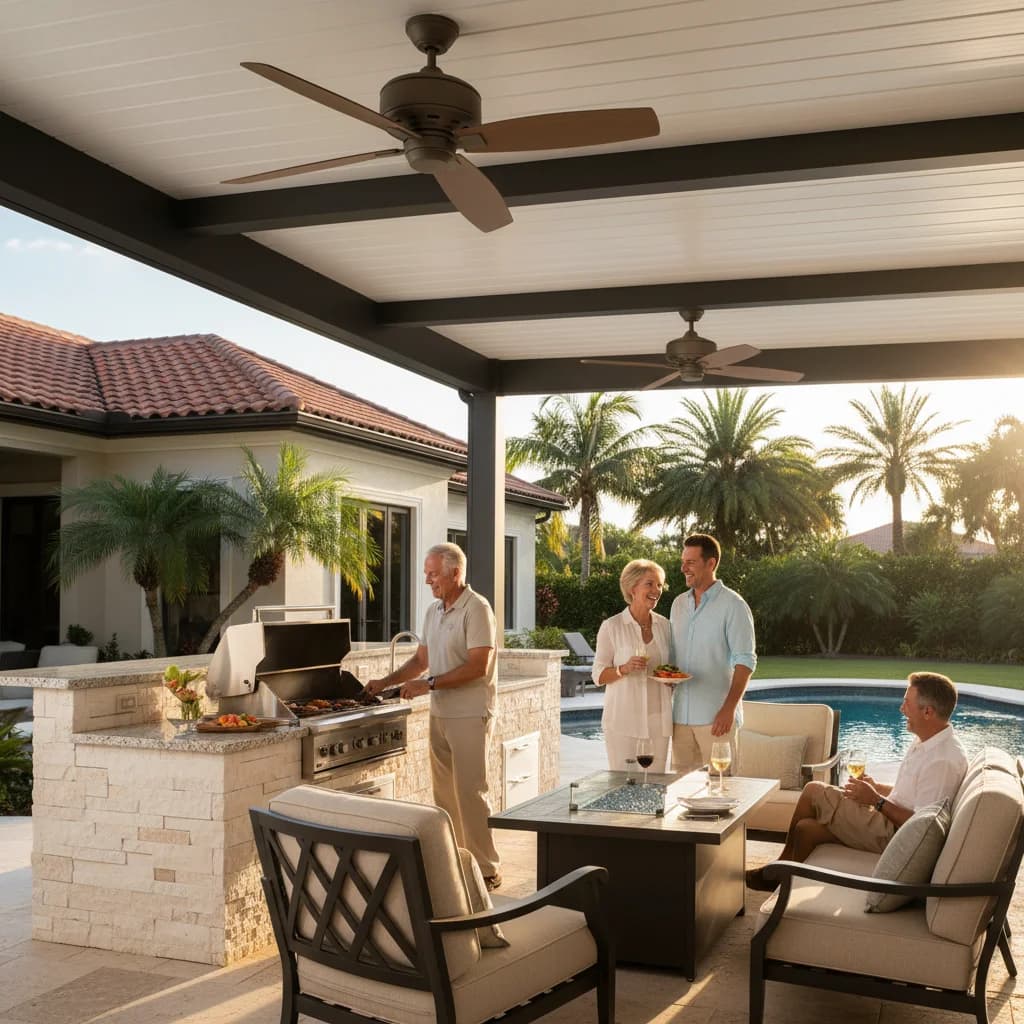
Patio covers are permanent structures that extend your home's roof line over outdoor spaces. They range from simple aluminum covers to elaborate structures with fans, lighting, and screens.
- Solid patio covers: Complete rain and sun protection. Ideal for outdoor kitchens and seating areas.
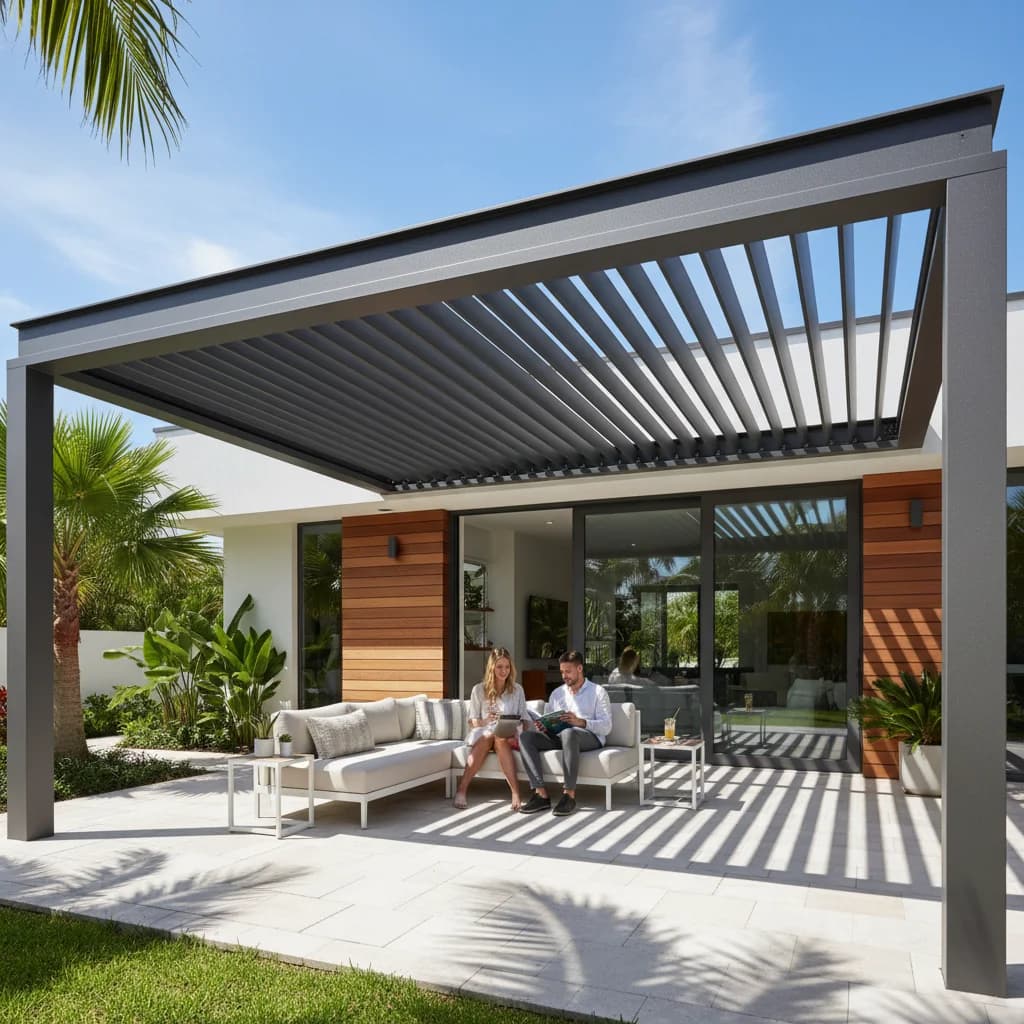
- Louvered pergolas: Adjustable slats let you control light and airflow. Premium option with high functionality.
- Screen enclosures: Common in Florida for pool areas. Provides shade while keeping insects out.
Florida consideration: Patio covers typically require permits and must meet Florida Building Code wind load requirements. Budget for this in your planning.
Motorized Shade Systems
Best for: Tech-savvy homeowners who want the ultimate in convenience and integration.
Modern motorized systems can include smart home integration (Alexa, Google Home), programmable schedules, sun and wind sensors, and remote monitoring via smartphone apps.
Florida consideration: Integration with weather monitoring can automatically protect your investment during sudden storms.
Materials That Last in Florida
Florida's combination of intense UV, salt air (in coastal areas), humidity, and heavy rain is brutal on outdoor materials. Cheaper materials that work fine in northern states often fail quickly here.
Frame Materials
- Powder-coated aluminum: The gold standard for Florida. Resists corrosion, lightweight, and lasts 20+ years. Insist on marine-grade powder coating for coastal locations.
- Galvanized steel: Strong and affordable, but can rust in salt air environments. Better for inland areas.
- Stainless steel: Most corrosion-resistant but expensive. Typically used for hardware and fasteners rather than entire frames.
Fabric Materials
- Solution-dyed acrylic (Sunbrella, similar): Color is dyed into the fiber, not applied on top, so it won't fade. Resists mildew. 10-year warranty common. This is what you want for Florida.
- Polyester: Less expensive but fades faster in our intense sun. Acceptable for budget installations if you understand you'll replace sooner.
- Vinyl/PVC: Waterproof and inexpensive but traps heat and doesn't breathe. Can become brittle in sun. Not recommended for quality installations.
Pro Tip: Check the Warranty
Quality fabric manufacturers offer 10-year fade and mildew resistance warranties. If an installer can't tell you the fabric brand or the warranty is only 2-3 years, you're likely getting inferior materials.
Realistic Cost Expectations
Awning prices vary significantly based on size, type, materials, and your location in Florida. Here are realistic ranges for quality installations in 2026:
| Type | Size Range | Installed Cost |
|---|---|---|
| Manual Retractable | 10-12 ft | $1,500 - $3,000 |
| Motorized Retractable | 12-16 ft | $3,500 - $7,000 |
| Fixed Window Awning | 4-6 ft | $400 - $1,200 |
| Aluminum Patio Cover | 12x12 ft | $4,000 - $8,000 |
| Louvered Pergola | 12x12 ft | $15,000 - $30,000 |
| Screen Enclosure | Pool-size | $8,000 - $20,000+ |
What affects price:
- Size (larger = proportionally more expensive)
- Motor and automation features
- Fabric quality and color selection
- Installation difficulty (two-story, difficult access)
- Permit requirements in your county
- Electrical work for motorized options
Features Worth Paying For
Not every upgrade is worth the extra cost. Based on Florida conditions, here's what actually matters:
Worth the Investment
- Wind sensor: Automatically retracts motorized awnings when wind speeds become dangerous. Peace of mind during storm season.
- Motorization for large awnings: Manual cranking a 16-foot awning gets old fast. Motors add convenience and are easier on the mechanism.
- Premium fabric: The difference between 3-year and 10-year fabric is often just a few hundred dollars. Worth it every time.
- Integrated LED lighting: For patio covers, built-in lighting extends usable hours and looks better than add-on fixtures.
- Gutter systems: For patio covers, integrated gutters prevent water cascading off edges during Florida downpours.
Nice to Have
- Smart home integration: Convenient but not essential. Most people just use the remote.
- Sun sensor: Automatically extends when sun reaches certain intensity. Useful if you're often away.
- Heating elements: Rarely needed in Florida.
Installation Considerations
The best awning poorly installed is worse than a basic awning properly installed. In Florida, installation quality affects how well your shade solution handles storms, rain, and our challenging climate.
What Good Installation Looks Like
- Proper anchoring: Florida homes often have stucco over concrete block. This requires specific techniques and hardware—not just screws into stucco.
- Correct pitch: Awnings need proper angle for water runoff. Standing water damages fabric and frames.
- Weather sealing: Any roof penetrations (for patio covers) must be properly flashed and sealed to prevent leaks.
- Electrical work: Motorized awnings need outdoor-rated connections installed by a licensed electrician.
Questions to Ask Your Installer
- How will you anchor this to my specific wall construction?
- Who handles the permit application?
- What's included in the installation warranty?
- Who do I call if there's a problem in year 3?
- Do you service what you install?
For more details on choosing an installer, see our guide: How to Choose the Best Awning Installer
Frequently Asked Questions
What is the best type of awning for Florida homes?
For most Florida homeowners, motorized retractable awnings offer the best combination of convenience and protection. They can be extended for shade during the day and retracted during storms or when not needed. For permanent coverage, aluminum patio covers with integrated gutters handle Florida rain well.
How much should I budget for a quality awning in Florida?
Budget $2,000-$5,000 for a quality retractable awning, $3,500-$8,000 for motorized models, and $5,000-$15,000 for permanent patio covers. Installation typically adds 20-30% to material costs. Higher-end hurricane-rated options cost more but may qualify for insurance discounts.
Do I need a permit to install an awning in Florida?
Most Florida counties require permits for permanent awnings and patio covers. Retractable awnings may be exempt in some areas. Your installer should handle permit applications. Always check with your HOA if applicable - many have specific requirements for awning colors and styles.
How long do awnings last in Florida?
Quality awnings last 10-15 years in Florida with proper maintenance. Aluminum frames last 20+ years. Fabric quality matters - solution-dyed acrylic fabrics like Sunbrella resist fading and mildew better than cheaper alternatives. Motorized components typically need service around year 8-10.
What wind rating do I need for Florida awnings?
Look for awnings rated for at least 75 mph winds for coastal Florida areas. Wind sensors on motorized awnings automatically retract them when winds exceed safe levels (typically 25-35 mph). Permanent structures should meet Florida Building Code requirements for your wind zone.
Bottom Line
Investing in quality shade for your Florida home pays dividends in comfort, energy savings, and property value. The key is matching the right solution to your needs and budget:
- For flexibility: Motorized retractable awning with wind sensor
- For permanent outdoor living: Quality aluminum patio cover with gutters
- For the best of both: Louvered pergola (premium option)
Whatever you choose, work with a licensed Florida installer who understands our unique climate and building requirements. The initial investment in quality installation pays off over the 15-20 year life of your shade solution.
Find Awning Installers in Your Area
Browse verified awning installers in these popular Florida areas:
Ready to Get Started?
Connect with licensed, experienced awning installers in your Florida community. Free quotes, no obligation.
Get Free Quotes from Local InstallersFind Awning Installers in Your Area
Connect with top-rated local awning companies for free quotes and expert advice.
View all Florida regions →